Colonised livestock transmit MRSA to farmers

These days, most people are aware of the increasing threat of antibiotic resistance, where bacteria that cause human disease become resistant to antibiotic therapy. This change is at least partially driven by the overprescription of antibiotics. Even our most robust antibiotics, which are active against a wide range of bacteria, are not up to the task of controlling certain infections, making the push to develop new antibiotics – or antibiotic alternatives – particularly compelling. One exceptionally well-publicised antibiotic-resistant bacteria is the methicillin-resistant Staphylococcus aureus (MRSA), which spreads throughout hospitals, communities and, interestingly, farms.

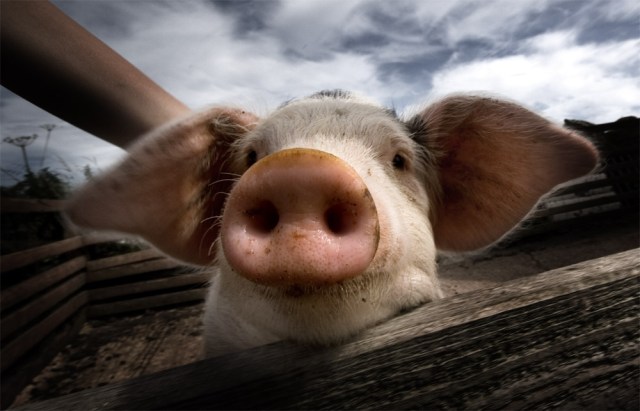
The first reports of livestock-associated MRSA (LA-MRSA) were published in 2003, after these bacteria were isolated from Dutch pigs. From there, LA-MRSA was identified in pigs across Europe, in Singapore and in North America. LA-MRSA was subsequently identified in horses and cattle n the United Kingdom. Unfortunately, livestock don’t keep these social microorganisms to themselves – the bacteria are more than happy to transfer across to their human keepers. Although the prevalence of LA-MRSA in the general human population is low, there is certainly evidence for it causing disease in people closely associated with agriculture and livestock. In one Dutch study, around 38% of cattle farmers were colonised with LA-MRSA, and the bacteria were more prevalent when longer periods of time were spent around animals.
4019355050_0aedee95b8_o

While the appearance of this bacteria in food-producing animals and the substantial exposure risk for people who work with them is a definite public health concern, following healthy guidelines in the preparation and consumption of animal products – such as only drinking pasteurised milk and checking that meat is thoroughly cooked –  should ensure that LA-MRSA has little general human impact.

Paterson G, Larsen J, Harrison E, Larsen A, Morgan F, Peacock S, Parkhill J, Zadoks R, & Holmes M (2012). First detection of livestock-associated meticillin-resistant Staphylococcus aureus CC398 in bulk tank milk in the United Kingdom, January to July 2012. Euro surveillance : bulletin europeen sur les maladies transmissibles = European communicable disease bulletin, 17 (50) PMID: 23241232

Golding GR, Bryden L, Levett PN, McDonald RR, Wong A, Wylie J, Graham MR, Tyler S, Van Domselaar G, Simor AE, Gravel D, & Mulvey MR (2010). Livestock-associated methicillin-resistant Staphylococcus aureus sequence type 398 in humans, Canada. Emerging infectious diseases, 16 (4), 587-94 PMID: 20350371

Graveland H, Wagenaar JA, Bergs K, Heesterbeek H, & Heederik D (2011). Persistence of livestock associated MRSA CC398 in humans is dependent on intensity of animal contact. PloS one, 6 (2) PMID: 21347386
Posted in Disease, Microorganisms, Science | Tagged , , , , , , , , , | Leave a comment

Zinc takes the sting out of jellyfish venom

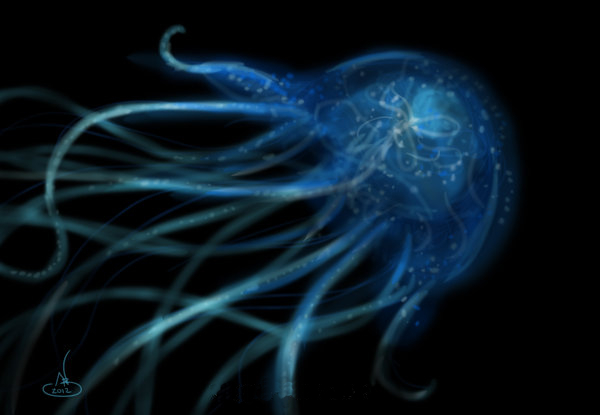
For me, there are three extremely good reasons never to go to Australia – huge furry-bodied poisonous spiders, venomous lightning fast snakes and sharks with great mouthfuls of serrated teeth. After reading a recent article, I am now happy to add a fourth to the list: the Australian box jellyfish. Your average run-of-the-mill jellyfish sting is definitely an unwelcome arrival, delivering a sharp, searing pain and leaving your skin all red and puckered, but it doesn’t usually require medical intervention. A sting from the Australian box jellyfish, Chironex fleckeri, a beastie with up to sixty 2-metre long tentacles, each capable of injecting hundreds of thousands of tiny poisonous capsules, can result in the rather more serious outcome of total shutdown of heart and lung function, and death. While there is a general anti-venom available, it’s not very effective, and there is definitely room for therapeutic improvement.

chironex_fleckeri_by_demonicsyco-d4tv4gk

A team of researcher’s from the University of Hawaii wanted to get to grips with the constituents of box jellyfish venom, how they worked to generate such a serious reaction in the human body and more importantly, how to counteract these effects. The venom of the box jellyfish is a complex mixture of proteins, fats and other active molecules. The most severe biological consequences are caused by the porin proteins, which are designed to create fluid-filled passages through cells that allow molecules to pass in and out. Just five minutes after box jellyfish venom is delivered, these porins begin to punch holes in red blood cells travelling round the circulatory system, allowing first potassium and then haemoglobin to leak out. After twenty minutes, this steady leakage causes red blood cells to pop, rendering them entirely useless as oxygen couriers. This is all accompanied by a steady decrease in heart function, including electrical abnormalities and arrhythmic contractions.

Zinc, one of the metallic elements, is already known to interfere with the ability of porins to burrow tunnels through cells. Mice were exposed to box jellyfish venom and then given an injection of zinc gluconate, an FDA-approved natural dietary supplement, immediately afterwards. This slowed and reduced the level of molecular leakage from red blood cells, maintained the heartbeat in a more normal state and ~60% of mice survived (none survived without the treatment). Zinc is therefore at least partially able to counteract the actions of box jellyfish venom, and could represent a useful new frontline treatment for box jellyfish sting victims.

You can read the original article in full here.

Yanagihara AA, & Shohet RV (2012). Cubozoan venom-induced cardiovascular collapse is caused by hyperkalemia and prevented by zinc gluconate in mice. PloS one, 7 (12) PMID: 23251508

Posted in Marine, Medicine, Science | Tagged , , , , , , , , , , , , | Leave a comment

British Sheep vs. Chernobyl Radiation

chernobyl

The explosion of reactor number four of the Chernobyl nuclear power plant in 1986 is widely regarded as the worst radiation disaster in human history. The radioactive fallout spread from Northern Ukraine throughout Northern Europe, dispersing large quantities of radioactive elements, including two caesium isotopes, Cs-134 and Cs-137. In the United Kingdom, this radiocaesium-laden cloud mingled with heavy rain falling in mountainous areas of North Wales and Cumbria, depositing substantial quantities of radioisotopes in uplands areas and introducing radioactivity into the food chain: plants took up the radiocaesium deposited in topsoil, livestock ate the plants and humans ate the livestock. In response, the Food Standards Agency (FSA), the independent authority that makes sure all food in the UK is safe and hygienic, implemented a series of laws restricting the movement, sale and slaughter of livestock grazed on contaminated uplands pastures. For sheep, a Summer monitoring program was designed to remove highly radioactive animals from the food chain.

welsh sheep

More than 25 years later, a government report released in November 2011 showed that although environmental radiocaesium still persists in Welsh and Cumbrian farms, levels found in sheep have gradually declined over time, with recorded measurements (on average 0.09 mSv per year) now well below the safe limit established by the ICRP (1 mSv per year). No radioactively unsafe animals have been identified for several years in Cumbria, and less than 0.5% (out of ~75,000 sheep) in North Wales. This is partly due to the common farming practice of fattening up sheep for several months on tasty lowland protein-rich, clover-heavy pastures before taking them to market. Lowland grasses contain much less radiocaesium, and since its biological half-life (the time required for the amount of active radionuclide to be reduced by 50%) is only 10-20 days, lengthy periods of grazing in these areas allows the natural process of radioactive decay to lower whole body levels.

Mathematical modelling estimates that even extremely hungry people who eat more than 25 kg of delicious sheep products per year couldn’t begin to approach unsafe levels of radiation exposure, thus all Chernobyl livestock legislation was recently fully revoked in the UK. While other areas of Europe, such as Scandinavia, continue to record substantial levels of radioactivity in stock animal populations, the UK has provided happy evidence that the impact of Chernobyl radiation is diminishing.

You can read the original FSA report in full here.

Field, A. (2011). An Assessment of Radiocaesium Activity Concentrations in Sheep in Restricted Areas of England and Wales and Potential Consumer Doses Food Standards Agency

Posted in Science, The Environment | Tagged , , , , , , , , , , , , , | Leave a comment

Official Business

We are extremely pleased to announce that from 18th December 2012, mmmbitesizescience will be hosted on SciLogs.com! The SciLogs platform offers daily doses of science, and is supported by spektrum.de and published in association with nature.com.

For those of you that have a soft spot for mmmbitesizescience in its current location, do not fear! All content will appear on both platforms, so you can choose where you prefer to find us.

For now, wish us luck in our tasty second home!

Posted in Science | Leave a comment

Sea creatures dissolve as oceans acidify

There’s little doubt that increasing carbon dioxide (CO2) emissions through human industry contribute to the changing of the Earth’s climate. Excess CO2 is absorbed by our ocean’s, changing their chemical composition and driving more blustery ocean winds that force deeper areas of sea water, which are naturally more acidic, to mix with shallower layers. The net outcome is ocean acidification, which can affect resident sea creatures. In particular, levels of aragonite, a naturally ocurring form of calcium carbonate used by plankton, fish and shellfish to build their skeletons and shells, drop severely in acidic sea water, making it difficult for organic calcification to proceed.

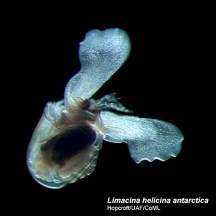
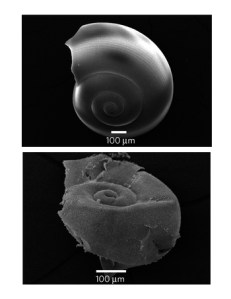
Limacina-helicina-antarctica-rangiOne species that incorporates aragonite into its shell is the sea butterfly, Limacina helicina antarctica, seen on the right. This creature lives in the Antarctic Ocean, has a lifespan of around 2 years and grows to be around 1 cm in diameter. As part of the British Antarctic Survey, researcher’s analysed how the sea butterfly was affected by ocean acidification in a test area located in the Scotia Sea. Specimens plucked from particular geographical quadrants where ocean winds caused more deep water upwelling and greater acidification exhibited substantial shell damage and dissolution (see image left; the top is a shell from Untitleda section with normal acidity levels, while the bottom is a shell from an acidic section). Furthermore, shells only had to bathe in such water for eight days to show significant signs of dissolution. While this doesn’t necessarily kill the little beasties, it does mean they are more vulnerable to attacks by hungry predator’s, and are more susceptible to infections, since they are in a weakened state.

Thus, as the acidic areas of the ocean continue to expand, populations of aragonite-shelled organisms will likely diminish and further affect global climate flux.

Bednaršek, N., Tarling, G., Bakker, D., Fielding, S., Jones, E., Venables, H., Ward, P., Kuzirian, A., Lézé, B., Feely, R., & Murphy, E. (2012). Extensive dissolution of live pteropods in the Southern Ocean Nature Geoscience, 5 (12), 881-885 DOI: 10.1038/ngeo1635

Posted in Evolution, Marine, The Environment, Uncategorized | Tagged , , , , , , , , , , , | Leave a comment