How to survive the bacterial antibiotic revolution

superbugs

These days, we have a pretty serious problem when it comes to our ability to kill resistant bacteria causing serious illness. People petition governments to urge action, while drug companies lament over how those pesky bacteria evolved to defeat their beautiful antibiotics – and their projected profit margins.

Yet, it’s not all bad. There are a few little ways that us humans can fortify our bodies with a sturdy shield against nasty bugs.

Nurture good bacteria

Keeping your good bacteria, especially the ones in your gut, happy, robust and numerous is a great way to deflect nasty microbial attacks. Eating live good bacteria in an effort to boost health was first documented by Suleiman the Magnificent (1494-1566), a Turkish emperor who prescribed yoghurt as a cure for the severe diarrhoea experienced by King Francis I of France.

Yoghurt, or rather the active bacteria in yoghurt, promotes a healthy microbe balance in the gut. Farm animals routinely fed dried versions of probiotics have a tremendously diminished rate of nasty Salmonella infection outbreaks, and for humans, eating probiotics has been promoted by scientists as a good way to control Clostridium difficile outbreaks, reducing the number of cases by around 65% in nursing homes and hospitals.

Probiotics thus appear to have the admirable ability to suppress the growth of dangerous bacteria, while nourishing our happy, friendly bacteria.

Give bad bacteria a hard time

While chefs rub a nice pork loin with garlic to infuse it with a tasty flavour, a great side benefit is that garlic seriously slows the growth of contaminating bacteria. What’s good for a pork loin is also good for tender humans. Physicians in the Roman army used fresh crushed garlic to cure illness, harnessing its ability to fight not just bacteria, but fungi, viruses and protozoa to boot.

Garlic has little effect on good bacteria, like the helpful lactic acid ones in our gut, but packs a punch with bad bacteria – perhaps because their slightly different biologies affect susceptibility to garlic’s active chemical ingredient, allicin. Pathogenic bacteria, such as E.coli, Shigella and Salmonella, isolated from the poop of patients suffering severe bouts of diarrhoea, can be effectively killed by garlic, at least as well if not better than antibiotics. Even multi-drug resistant bacteria succumb upon exposure to crude garlic extracts.

Protect places where bacteria are likely to breed

There are plenty of nasty bacteria present on or in our bodies all the time. Only when damage occurs – say, when you fall over rollerskating and scuff your knee – do these bacteria get an opportunity to wreak havoc. But open wounds can be effectively treated with a protective glaze from the kitchen cupboard. Honey, the sweet and viscous liquid produced by honey bees, has a potent natural antimicrobial activity, packed full of bee proteins, like defensin-1, which punch holes in bacterial membranes and recruit immune cells to battle invaders.

The gooiness – and high sugar content – of honey, especially Manuka honey, also sucks moisture out of injured tissues where bacteria could thrive, seals off damaged areas and stops wounds from festering. Honey is capable of efficiently killing tough disease-causing bacteria, like methicillin-resistant Staphylococcus aureus (MRSA) and Pseudomonas aeruginosa, a tricksy little bug that often plagues cystic fibrosis patients.

So, with bacteria currently outmanoeuvring us in the antibiotic arena, exploring the world of natural antimicrobials, perhaps by simply adding a little yoghurt, honey and garlic into our lives, might be a great way to strengthen our individual biological shields.

Johnston BC, Ma SS, Goldenberg JZ, Thorlund K, Vandvik PO, Loeb M, & Guyatt GH (2012). Probiotics for the prevention of Clostridium difficile-associated diarrhea: a systematic review and meta-analysis. Annals of internal medicine, 157 (12), 878-88 PMID: 23362517

Karuppiah P, & Rajaram S (2012). Antibacterial effect of Allium sativum cloves and Zingiber officinale rhizomes against multiple-drug resistant clinical pathogens. Asian Pacific journal of tropical biomedicine, 2 (8), 597-601 PMID: 23569978

Kwakman PH, te Velde AA, de Boer L, Speijer D, Vandenbroucke-Grauls CM, & Zaat SA (2010). How honey kills bacteria. FASEB journal : official publication of the Federation of American Societies for Experimental Biology, 24 (7), 2576-82 PMID: 20228250
Posted in Bacteria, Disease, Microorganisms, Science | Tagged , , , , , , , , , , , , , , , , , , | 1 Comment

The Science of Guns and Violence in America

bullets

I read a Nature News article recently about gun control in the USA that horrified me so much that I now have to write a bit about this horrifying topic myself.

It goes without saying that there is a huge problem in America that stems from people who should never have access to guns being able to get access to guns. In many states, people with criminal records can get a gun. People with mental health issues can get a gun. Parents can get a gun, and don’t have to prove that they have a locked location to keep it secured from young, inquisitive minds.

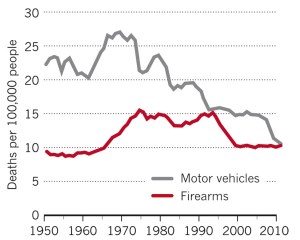
Out of all the developed countries, the USA has the most firearms per person, and the highest number of gun murders. But perhaps the most gut-churning revelation, seen in the graph below, is that the number of deaths caused by firearms is now the same as the number of deaths caused by car accidents. While supporters of guns might gnash their teeth at this, giving out responses like, “cars cause deaths but we still drive them”, well, yes, that’s all very well, but cars aren’t machines that were ultimately designed for the purpose of killing.

gun-deaths-2

Here’s another startling fact: that research into improving gun handling, reducing gun accidents and squashing levels of gun crime is currently being performed by just a handful of scientists, and almost none of it is coming from a public health angle. To make matters worse, since 1996, scientific research into gun violence has been prohibited by law from receiving funding from the US Centers for Disease Control and Prevention if it advocates or promotes gun control. In 2012, this funding blockade was extended to include the much bigger US Department of Health and Human Services. The lobbying arm of the National Rifle Association, or the NRA, was instrumental in putting this legislation in place, and appears to have had a substantial influence on the policies of the American government.

That such organisations can still set political agendas is despicable. Policy-making has to be driven by evidence. Plugging up research into gun control dries up the supply of evidence, and implies that there is no interest in making the USA, and the American people, safer.

If you’re interested to learn more, you might want to look up Dr. Garen J. Wintemute, who has been researching the public health issues surrounding the presence of firearms in America. You can read a short and handy list of his key findings here, or read his brilliantly written review, ‘Tragedy’s Legacy‘. You can also sign this petition from Mayors Against Illegal Guns, which asks members of congress to take action against gun violence.

Wintemute GJ (2013). Tragedy's legacy. The New England Journal of Medicine, 368 (5), 397-9 PMID: 23268646

Posted in Science | Tagged , , , , , , , , , , | 3 Comments

Stem Cells Wanted: Alive Not Dead

adult_stem_cell_0527Stem cell therapies are taking off, in a surprisingly unregulated way. While most humans have to go to places like South Korea to receive them, horses, dogs, cats, pigs and tigers are already being treated in North America. The most overzealous stem cell companies bluster about their currently unlicensed ability to beat down cancer, diabetes, blindness and a whole raft of other diseases, a stretch given the paucity of clinical data available, yet such therapies are nevertheless generating a new buzz in the treatment world.

For all this showboating, stem cell therapies remain incredibly difficult to implement, with lots of practical problems still facing a system usually based on harvesting a patient’s stem cells, modifying them, bulking up their numbers in a dish, then reinfusing them to try and repair damage or disease. One of the biggest challenges is keeping stem cells alive and in their natural immature state once they’re outside the body, where they inhabit a specially-designed cosy little niche that keeps them well-fed and happy. Re-creating such a niche in a dish is hard.

One of the ways to improve stem cell survival in the lab is to mix them with a supportive layer of nanny cells that nourish, cuddle, calm and generally look after the cells. One team of researcher’s in Massachusetts found that adding fat cells in this nannying role kept stem cells alive longer, perhaps due to the unique spectrum of fatty proteins they secreted, such as adiponectin and TNFa. Another team found that adding specialised blood vessel cells, called perivascular cells, as nanny cells drastically improved the survival and usefulness of their stem cells, and did this much better than the standard MSC’s currently used by many stem cell research labs. In both cases, the nanny cells had to be in direct contact with the stem cells in order to exert their positive effects.

The sum of this research implies that generating a really good niche in a dish might involve mixing lots of nanny cells of different origin, like fat, bone and blood, in one big culture to capture as many aspects of the biological stem cell home as possible.

Corselli, M., Chin, C., Parekh, C., Sahaghian, A., Wang, W., Ge, S., Evseenko, D., Wang, X., Montelatici, E., Lazzari, L., Crooks, G., & Peault, B. (2013). Perivascular support of human hematopoietic stem/progenitor cells Blood, 121 (15), 2891-2901 DOI: 10.1182/blood-2012-08-451864

Glettig, D.L., & Kaplan, D.L. (2013). Extending Human Hematopoietic Stem Cell Survival In Vitro with Adipocytes BioResearch Open Access

claimtoken-5171cafa478ba

Posted in Bioengineering, Disease, Medicine, Science | Tagged , , , , , , , , , , | Leave a comment

Eating too much salt sends immune system haywire

salty salt

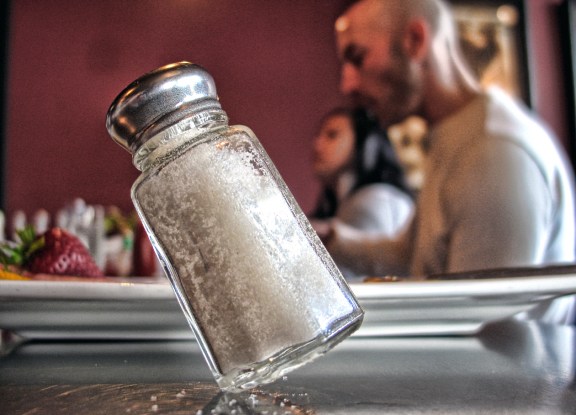
When it comes to knowing whether eating too much salt is a bad thing, there is a surprising lack of “verified-by-science” information available*. A certain level of salt, or sodium chloride, is a biological necessity that keeps muscles pumping and nerves firing off electrical signals. Yet lots of studies have suggested that high levels of dietary salt could contribute to problems with blood pressure and heart disease, which is why the CDC (and probably your mum) tells you to reduce your salt consumption. On the flip side, a study undertaken in 2011 by the Cochrane Collaboration (an international not-for-profit that performs unbiased reviews of existing experimental data to answer important public health questions) concluded that it is still unknown if low salt diets have positive or negative impacts on health.

Research has now been published that places an intriguing new entry onto the “salt is bad” list, linking high levels of salt to the development of autoimmunity – that is, your own immune system reacting against you. Rates of autoimmune disease have rocketed in the last 50 years, and while some of this is due to genetics, the sheer scale of the problem strongly suggests that modern lifestyle factors, such as diet, play a huge role.

Many autoimmune syndromes, like psoriasis, multiple sclerosis and arthritis, are driven by issues with a population of immune cells known as TH17‘s. Researcher’s have now observed that feeding mice a high salt diet, within relevant consumer levels, leads to an overproduction of these TH17 cells that are horribly dysfunctional, and induce earlier onset, more severe autoimmune symptoms in animal models of multiple sclerosis. While this research doesn’t go far enough to directly link high salt intake with autoimmunity, it does give serious credence to that notion.

*This New York Times article does an excellent job of putting it all in one place

Kleinewietfeld M, Manzel A, Titze J, Kvakan H, Yosef N, Linker RA, Muller DN, & Hafler DA (2013). Sodium chloride drives autoimmune disease by the induction of pathogenic TH17 cells. Nature PMID: 23467095

Posted in Disease, Immunology, Science | Tagged , , , , , , , , , , , | 4 Comments

The Evolution of the Impenetrable American Bedbug

ugly bugMost of us are quite content to share our beds with a partner or a kitty, but are less inclined to extend the same warm welcome to the common bedbug, Cimex lectularius. These parasitic insects, which feed exclusively on blood, have undergone a population explosion since the mid-1990’s, with infestations recently hitting the headlines all over the globe. Buildings full of warm and cosy human nests, such as blocks of flats and hotels, are enticing bedbug havens. Although pesticide sprays are deployed as control measures, research from Denmark has already suggested that this isn’t a viable long-term solution, since bedbugs quickly develop resistance to common insecticides like chlorpyrifos, permethrin and deltamethrin.

New research from a team at the University of Kentucky, USA, has now revealed how bedbugs evolve such resistance. Pesticide-resistant bedbugs can exhibit changes in up to fourteen key sections of DNA compared to those that are pesticide-susceptible. Individual bedbugs isolated from 21 test locations across the midwestern USA (including LA, Cincinnati, Lexington, Plainview, Louisville and Chicago) all had at least two of these fourteen genetic modifications, most of which bolstered the shell, stopping or slowing chemical penetration. Changes in other genes increased the activity of pesticide-detoxifying metabolic pathways, or improved the ability of bedbug nerve cells to spit out chemicals targeted to the central nervous system. This knowledge could help to devise useful new bedbug control strategies.

Zhu F, Gujar H, Gordon JR, Haynes KF, Potter MF, & Palli SR (2013). Bed bugs evolved unique adaptive strategy to resist pyrethroid insecticides. Scientific reports, 3 PMID: 23492626

Kilpinen, O., Vagn Jensen, K.-M., & Kristensen, M. (2008). Bed Bug Problems in Denmark, with a European Perspective Proceedings of the Sixth International Conference on Urban Pests

Posted in Evolution, Genetics, Science | Tagged , , , , , , , , | Leave a comment