Blood pressure during treatment impacts oncolytic virus therapy

In an exciting new study released from the Mayo clinic, oncolytic vesicular stomatitis virus (VSV) was infused into mice with myeloma that had either just exercised (high blood pressure; ‘EX’) or were anaesthetised (low blood pressure; ‘ISO’).

Mice that had a higher blood pressure during intravenous perfusion showed a greater density of virus reaching the tumour site. Virus was also spread across the tumour in a more uniform pattern.

The mice receiving virus treatment at a higher blood pressure also had a significantly longer survival time (see graphs above; top=survival curves, bottom=individual tumour sizes).

4625718274

These results have potential positive implications for patients undergoing oncolytic viroimmunotherapy, since raising the blood pressure is easily achieved prior to virus infusion without the need for additional drugs or interventions.

Image: Miller et al. 2015Repost from the Stojdl Lab blog

Posted in Cancer Immunotherapy, Oncolytic Virus, Science | Leave a comment

New tools promise life-saving treatments from basic science

Umberto Salvagnin : Flickr

If it’s done well, translational science can save lives. If it’s done poorly, millions of research dollars can be wasted. Image credit: kaibara87/Flickr/CC BY-SA

A mouse with cancer dies from a trial treatment that cured its genetically identical sibling. A stem cell in a dish has a different reaction than usual to a chemical cocktail and morphs into something unexpected.

This is the reproducibility crisis, and it is killing translational science.

New tools for critically reviewing research, created by researchers in the U.K., promise to tackle this crisis by pinpointing the flaws in the way we decide what is “good” data. They also promise to keep scientists on track and make sure only the most promising research moves towards the clinic.

Saving lives

If it’s good, translational science — that is, science that makes the jump from the lab into the clinic — can have a real impact on saving patient lives. If it’s bad, millions of research dollars can be wasted pursuing phantom treatments that should have ended up on the science scrapheap.

As a researcher in biology, immunology, virology and cancer, I’ve spent the last 13 years working at the lab bench and in the clinic. Now, I’m working on collecting and critically analyzing published research studies to make sure that the best drugs and treatments get licensed for patients.

Taking a deep dive

Scientific research typically falls into three camps: basic in vitro research (which is mostly done in a dish), pre-clinical in vivo research (that gets tested in animals) and clinical research (which is performed in patients). We already have a great technique to look at pre-clinical and clinical research to decide if it’s good enough to make it into patients, using a deep search and report approach called a systematic review.

A systematic review takes a hard look at the results from every high quality study that’s ever been published in a particular area of research and pools them all to produce a more powerful, overall conclusion about whether or not a treatment or technology is really effective —all the while minimizing bias and random error. Systematic reviews are used by national health boards around the world to decide whether new drugs or diagnostic tools can be approved for patient use.

But systematic reviews are hardly ever applied to basic research. This is a bit ironic, given that basic research is the foundation that every pre-clinical and clinical study is built upon. If basic research is undermined or unreliable, that means a disastrous collapse of the translational system that pushes new treatments into the clinic.

Flaws in the system

In a new paper, published in PLoS One, British researchers have highlighted some of the fundamental flaws that are going unchallenged in our research system when scientists fail to apply systematic approaches to their basic research. After investigating a test case — looking at how a cell’s machinery gets unequally divided after the cell splits in two — they found that just seven per cent of studies in this area could be considered reliable. Most were too ambiguous to be useful, and some were downright alarming. The team then custom built a brand new set of research tools to take a closer look at these studies.

One of the tools analyzed if a particular model system — from starfish, sea urchins, worms and fruit flies to mice, monkeys, humans and hamsters — was likely to produce a reliable answer to a particular research question. While most studies (61 per cent) used a relevant model, seven per cent were not fit for the purpose.

In one particular study, scientists claimed to have created a new type of stem cell-like model, but they never did a basic check to confirm that the cells behaved in a stem cell-like way.
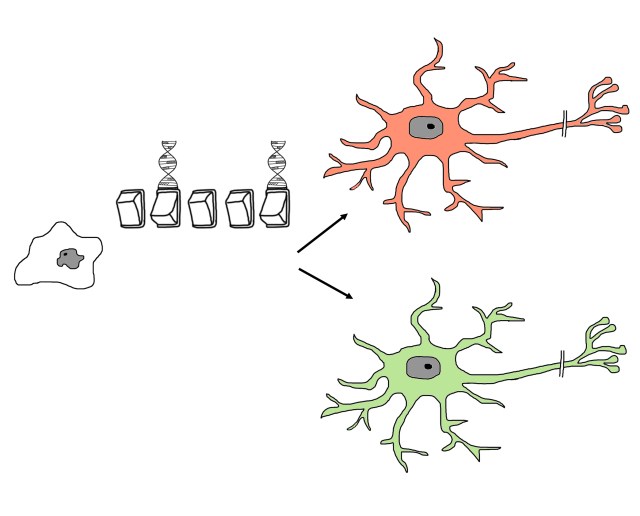
Stem cells can divide into different types of cells – so it’s important to have good markers to fingerprint their offspring. Image credit: swiftscientist/pixabay

Another tool was designed to find out if the tags researchers used to shine a spotlight on different parts of the cell’s machinery were tested ahead of time to check that they were going to work. The outcome: most papers (57 per cent) never checked these key research tools before they started using them.

Inevitably, this led to some contradictory results. For example, one study used two different types of tag to highlight the same cell structure — the mitochondria, the powerhouse of the cell — and reported totally opposite results.

Research crunch

Perhaps most shockingly, 83 per cent of studies failed to include any basic internal checks: positive controls (which are designed to work every time), negative controls (which are designed to fail every time) and experimental repeats (which are designed to make sure the results are real). These are the most basic building blocks of scientific research. Every researcher gets drilled to include these when they start out in science. The fact that these are being missed so often — not just by the scientists themselves, but by the peer reviewers who comb through their papers before they’re published — is a truly alarming trend.

Encouraging basic researchers to apply more rigour in how they gather, analyze and critically evaluate the data they generate in the lab is an important issue at the very heart of research. New tools, such as the ones developed by this British team, will help researchers to systematically review their basic research findings before they get moved towards the clinic. They should also help to address some of the core issues that lead translational studies to fail, and millions of research dollars to be wasted.

Ultimately, these approaches will help “landmark” research findings, which are all too often wildly exaggerated in the current research climate, become a reality, and actually help the patients in the clinic who need them the most.

Originally published with The Conversation Canada.

Posted in Health, Medicine, Reproducibility, Science, Science Policy, systematic review | Tagged , , , , , , , | Leave a comment

Seafood offers up a mouthful of man-made garbage

baked-1549171_1280

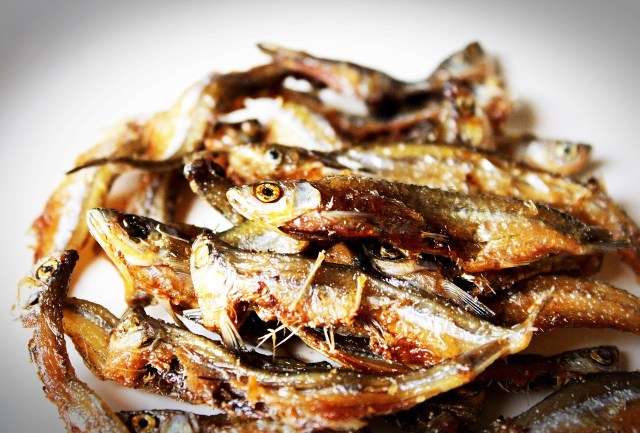
Public opinion is divided on the pleasure of consuming sea creatures that stare boldly back at you while you eat them. Like Marmite®, you either love it or you hate it.

Now, researchers at the University of California, Davis have added an extra level of complexity to this debate by showing that the seafood we eat regularly contains man-made rubbish that has made it out to sea.

The team caught and sampled a wide range of seafood from different ocean habitats – including fish (like anchovies, red snapper and tuna) and oysters – from Half Moon Bay and Princeton in California (USA) and Makassar on the island of Sulawesi (Indonesia).

At both these sample sites, around 1 out of every 3 fish or oysters contained litter. And over half of all the sampled fish species had man-made litter in their digestive tract.

(On the bright side, this suggests that gutting a fish before consumption should remove the litter-laden portion. But for fish and seafood that are eaten whole, it’s a very different story).

In Indonesia, most of this debris was plastic, including plastic fragments, foam and film. In the USA, the seafood was mostly full of textile fibres.

types of debris

Samples of the types of man-made litter sampled in seafood from sites in Indonesia and the USA. Modified from Rochman et al 2016.

This difference in the type of rubbish found in the seafood in the USA vs. Indonesia probably reflects the different styles of waste management in the two countries.

About 30% of solid waste generated in Makassar gets discarded straight into the ocean, so large plastic objects can easily degrade into small fragments and particles over time.

In California, over 200 waste processing plants dump treated effluent into the ocean, but these systems are not designed to remove synthetic fibres from washing machine runs – or a whole host of other complex drugs, like antibiotics and opiates. In fact, overhauling the waste management systems in countries around the world to deal with these issues, and ultimately provide safer drinking water, is a critical concern.

water-159017_1280

This research highlights a real worry over the impact that eating these hidden seafood treasures could have on human health. This could range from physical trauma as detritus is inadvertently consumed, to the accumulation of toxic levels of pollutants up the food chain, to a lack of food security if seafood populations decline after eating our litter or swimming in our chemical-laden water.

Indeed, several organisations, including the United States Environmental Protection Agency (USEPA) and the United National Environment Programme (UNEP), have prioritised research into the effect that man-made debris has on the health of humans and their environment.

When you see the horrific pictures of the Great Pacific Garbage Patch, where artificial islands of man-made litter stretch out for hundreds of miles, it’s hardly surprising that hundreds of years of waste mismanagement are coming back to haunt us.

But it’s uncomfortable for it to stare up at us so boldly from our plates.

For more information, check out this great TED talk by Charles Moore.

Rochman CM, Tahir A, Williams SL, Baxa DV, Lam R, Miller JT, Teh FC, Werorilangi S, & Teh SJ (2015). Anthropogenic debris in seafood: Plastic debris and fibers from textiles in fish and bivalves sold for human consumption. Scientific Reports, 5 PMID: 26399762

Posted in Conservation, Ecology, Marine, Science, The Environment | Tagged , , , , , , , , , | 1 Comment

Kiss Me Under the Parasitic Angiosperm

Mistletoe - great for making single people feel unloved at Christmas.

Mistletoe – great for making single people feel unloved at Christmas. Credit: Agnes Kantaruk/Shutterstock.

Mistletoe is held in high regard at this time of year. No Christmas decorations are complete without a garland of cheerful mistletoe hanging on the door, or suspended prettily from the rafters as an incentive for festive romance.

In nature, though, many species of mistletoe, such as Viscum album, are actually parasitic pests. They plug directly into the veins of other plants, and shamelessly siphon off water and nutrients. Viscum album is a hemiparasite, so it gets most of its nutrients from tapping host plants this way, but it still dabbles in photosynthesis, the process whereby light energy from the sun is converted into chemical energy.

Since parasites use their hosts to do most of their biological work for them, they typically trim down their DNA to remove the genetic instructions needed for now-redundant tasks. Plant cells – like animal cells – contain two separate sets of DNA: in the nucleus and in the mitochondria. Nuclear DNA orchestrates most of the functions of the cell, while mitochondrial DNA generates the power to fuel these cellular activities. Roughly half of the genes encoded by mitochondrial DNA are dedicated to producing energy in the respiratory chain and the TCA cycle.

Genetic Mammoth or Mouse?

Although mistletoe is a parasite, the DNA housed in the nucleus of its cells paradoxically encodes one of the largest genomes found in angiosperms (flowering plants). Yet scientists at the University of Copenhagen have now shown that the DNA in mistletoe’s mitochondria is astoundingly genetically lean. In fact, Viscum album‘s mitochondrial genome encodes just 12 proteins*. To put this in context, Cycas taitungensis, an evergreen tree, has a comparatively mammoth mitochondrial genome encoding 41 proteins.

So, where did mistletoe’s mitochondrial genes go? Were they simply genomic dead wood that got the chop? Or did mistletoe never have a bulky mitochondrial genome in the first place? Scientists aren’t sure. But it’s possible that mistletoe has copied the approach that legumes like soybean and cowpea have taken: to jettison genes from the mitochondria and embed them in the nucleus, where they continue to work from a satellite location.

Gene Puzzle

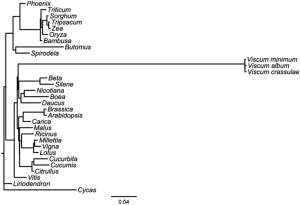
Not only is the Viscum album mitochondrial genome peculiar because it encodes such a small number of proteins, but its genetic code is also so scrambled that it’s difficult to see how it could work properly. In fact, when you line up the mitochondrial DNA sequences of different plants, mistletoe genes are tremendously divergent, sticking way out on their own branch, thumbing their prickly haustorium at other plants (below).

Comparing the genetic sequence of three mistletoe species alongside other plants. Credit: Petersen et al 2015/Scientific Reports.

Comparing the genetic sequence of three parasitic Viscum mistletoe species alongside other plants. Credit: Petersen et al 2015/Scientific Reports.

Having said that, these jumbled genes probably do have roles to play: we just haven’t got to the point where we can understand their code or how they work. Otherwise, it would be difficult to explain how juvenile mistletoe survives before it latches on to its host plant, since mitochondrial genes are usually critical for sustaining life.

There’s certainly a lot more work to be done to understand the nature of mistletoe’s particular brand of parasitism and its seeming genetic mishmash. For now, though, it’s probably time to put the pipette down, sit by a crackling fire with a glass of eggnog in one hand and a mince pie in the other, and appreciate the simple festive cheer of this parasitic angiosperm.


* In the same study, two other parasitic mistletoe species, Viscum minimum and Viscum crassulae, were found to encode just 10 proteins; these represent the smallest number of proteins produced from a mitochondrial seed plant genome currently on record, beating the previous record holder, the white campion (Silene latifolia), at 25 proteins.

Petersen G, Cuenca A, Møller IM, & Seberg O (2015). Massive gene loss in mistletoe (Viscum, Viscaceae) mitochondria. Scientific Reports, 5 PMID: 26625950

Posted in Genetics, Plants, Science, The Environment | Tagged , , , , , , , , , | Leave a comment

Fish oil capsules probably won’t boost your brain

fish oil for the brain

My mum and dad are troopers. Every morning, they down a tablespoon of fish oil in an effort to stave off old age and dry rot. And they do it without any obvious signs that swallowing a few millilitres of fishy oily stinky liquid is probably the worst way to start a morning. Clearly, they’re from a more stoic generation.

Since fish oils – or more accurately, the omega-3 long chain polyunsaturated fatty acids (n-3 PUFAs) in fish oils – have been linked to cognitive performance, the “lubricate the ol’ brainbox!” idea behind getting the stuff into your system has a lot of appeal. Especially when you’re trying to achieve literary perfection in your blog articles (disclaimer: no fish oil was consumed during the writing of this article). But, for some of us, the idea of choking it down in its liquid form is overwhelmingly repulsive.

Enter: fish oil capsules. On the surface, the perfect solution! The fish oil stays safely trapped in its hard shell until it passes down through the stomach and into the upper intestine. Once there, the capsule degrades enough to allow the brain lube to erupt.

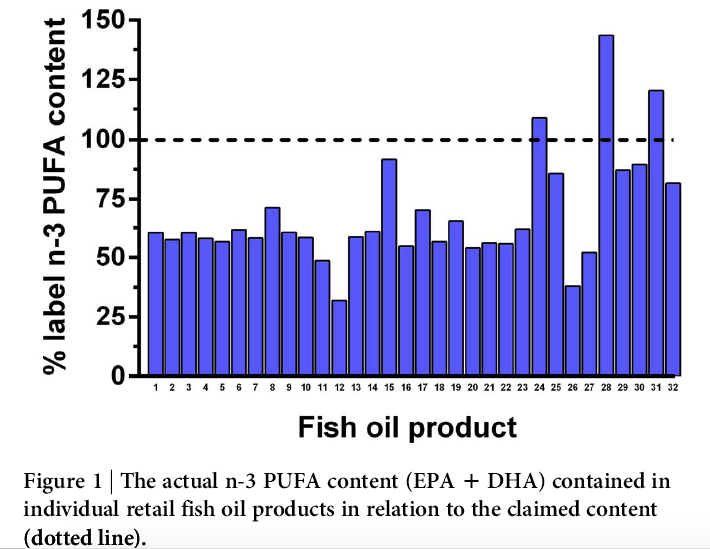
There’s just one problem. New research led by Benjamin Albert at the University of Auckland in New Zealand shows that the quality of over-the-counter fish oil capsules is pretty rubbish. Albert and his team bought 32 different brands of fish oil capsules, and measured them for levels of eicosapentaenoic acid (EPA) and docosahexaenoic acid (DHA), supposedly the “good” n-3 PUFAs responsible for brain gains. They found that 69% (29/32) had lower levels of EPA and DHA than the companies claimed on the label (see the graph below). As an interesting side note, the more expensive capsules were more accurately labelled for EPA and DHA levels.

EPA DHA levels in fish oil capsules

To achieve such lower-than-advertised levels of EPA and DHA, either the freshly isolated fish oil had lower concentrations to begin with, or the oil within the capsule degraded over time. Both EPA and DHA are prone to oxidation, and break down to form a soup of peroxides, aldehydes and ketones. In fact, fish oil supplement manufacturers typically add anti-oxidants into their capsules to slow this process.

When the New Zealand team tested oxidation values across fish oil capsules, 92% exceeded one or more international recommendations. But older capsules that had been on the shelves for longer didn’t show any difference in oxidation values compared to newer ones. This suggests that there were lower levels of active EPA and DHA at the very beginning of the manufacturing process, and that many companies may be failing to test their individual batches of fish oil.

What might such oxidation values mean for the consumer? While some studies indicate that oxidation breakdown products may in fact be responsible for the anti-inflammatory benefits of fish oil, at high experimental doses, they can cause organ toxicity, stunted growth and accelerated atherosclerosis. The overall effect (if any) of consuming products with high oxidation values on health is still very unclear; hence, levels in fish oil capsules are subject to recommendations based on palatability rather than legal requirements based on safety.

If this research is representative of the global market, consumers have a 1 in 11 chance of buying fish oil capsules that contain robust levels of EPA and DHA. These odds might improve a little if they stick to high-end brands. All in all, until better standards and regulations hit the fish oil supplement market, it’s probably a good idea to look for your brain boost elsewhere.

Albert, B., Derraik, J., Cameron-Smith, D., Hofman, P., Tumanov, S., Villas-Boas, S., Garg, M., & Cutfield, W. (2015). Fish oil supplements in New Zealand are highly oxidised and do not meet label content of n-3 PUFA Scientific Reports, 5 DOI: 10.1038/srep07928


Posted in Health, Marine, Science | Tagged , , , , , , , , , | Leave a comment