Nerve growth factor: not just for nerves anymore

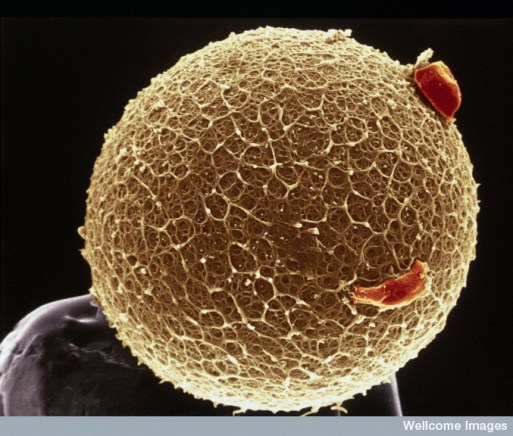
The male ejaculate, semen, is an eclectic mix of proteins, chemicals and hormones, all in a nicely fluid solution ideally suited to transporting spermatozoa during the process of reproduction. While many seminal fluid components and their corresponding biological functions have been well described, a team at the University of Saskatchewan in Canada has recently characterised a new molecule in semen that induces ovulation and persuades the ovary to ramp up production of pregnancy hormones in llamas.

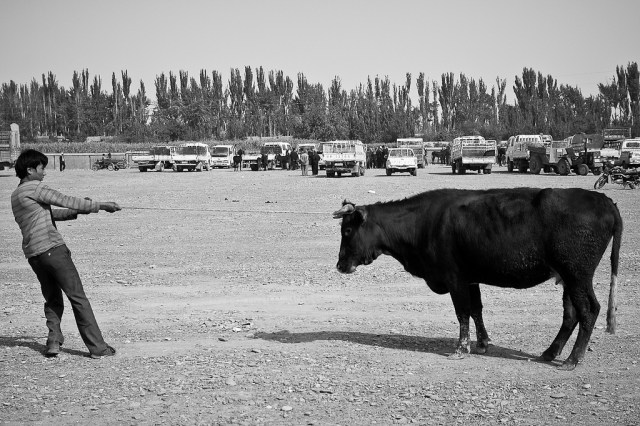
While most mammalian species (such as cattle, mice and humans) work on the ‘spontaneous ovulation’ model of reproduction, where at a specific point in the menstrual cycle, hormonal and developmental conditions harmonise to allow follicle release, some mammals (such as the llamas used in this study, as well as camels, cats, rabbits and koalas) work on the ‘induced ovulation’ principle, where both the physical stimulation of intercourse and seminal fluid factors are necessary to encourage the ovary to release a ready-to-be-fertilised ovum.

This newly-established seminal fluid factor has been identified as nerve growth factor (NGF), and is present in semen from both induced ovulator and spontaneous ovulator species. NGF has previously been known for its direct role in the survival and growth of neurons in the central nervous system. This is the first documented evidence that NGF can have a direct biological effect on influencing ovarian function in the female reproductive tract. The findings of this study may have relevance for human fertility issues.

Read the original article here.

Ratto MH, Leduc YA, Valderrama XP, van Straaten KE, Delbaere LT, Pierson RA, & Adams GP (2012). The nerve of ovulation-inducing factor in semen. Proceedings of the National Academy of Sciences of the United States of America, 109 (37), 15042-7 PMID: 22908303
Posted in Reproduction, Science | Tagged , , , , , , , , , | Leave a comment

Genetic reactions to peer pressure

When it comes to the standard peer pressure issues, such as drugs, sex and alcohol, I can be a very stubborn person. For example, I don’t like the effects of drinking alcohol in substantial volumes, so if someone actively encourages me to do so, I naturally rail against it. I want to do it my way, or the high way, and woe betide anyone that thinks otherwise. I always imagined that was something to do with the environment I was brought up in: being born an only child and astrologically a Leo to boot surely spurred the development of this obstinate personality trait? Now, a study from the University of Colorado Boulder implies that genetic background might also contribute to succumbing (or not) to peer pressure.

Researcher’s examined DNA data from a study launched in the USA in 1994, Add Health, that tracked American teenagers from grades 7-12 (ages 12-18) onwards. They divided teenagers into those who attended schools that reported either low or high rates of substance abuse and analysed the promoter region that drives expression of the 5-HTT gene, whose function is to regulate the neurotransmitter, serotonin. The 5-HTT promoter comes in three variants: long/long, long/short and short/short, depending on which version you inherit from your mother and your father. The long/long promoter generates higher levels of 5-HTT, which leads to less serotonin, while the short/short promoter does the exact opposite. Individuals with the long/short promoter fall somewhere in the middle.

As you might expect, in school’s with a high rate of substance abuse (where cigarettes and alcohol were more available), greater numbers of pupils were generally involved with these activities, and the converse was also true. But teenager’s who had two ‘long’ copies (long/long) of the 5-HTT promoter had lower-than-average rates of substance abuse, regardless of what their school environment was like.

The 5-HTT promoter has previously been implicated in a variety of mood and developmental disorders: having two long copies (long/long) appears to be protective against the development of depression, while having two short copies (short/short) has been linked to the development of both attention deficit disorder and epilepsy.

Read more about 5-HTT and genetic variability here.

Posted in Genetics, Science | Tagged , , , , , | Leave a comment

The (genetic) answer to the polar bear (evolution) question

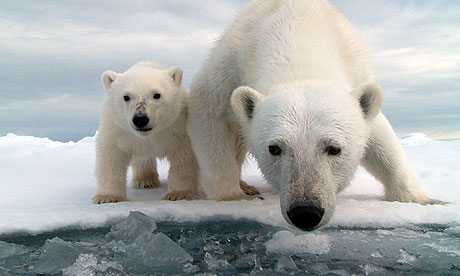
When did polar bears evolve to form a separate and distinct species from their relatives, the brown and black bears? Researchers from China, Norway, Iceland, Denmark, Singapore, Canada, Mexico and the USA have recently collaborated to address this very question using whole genome sequence analysis. The team compared both mitochondrial and nuclear DNA extracted from modern day polar, brown and black bears with DNA retrieved from an ancient polar bear jawbone (115-130,000 years old) excavated in Svalbard, Norway. Their results suggest that polar bears and brown bears have had largely independent evolutionary histories for the last 4-5 million years, with black bears having split off even further before this. However, a detectable level of gene flow has continued between polar and brown bears since then, suggesting interbreeding events: indeed, brown bear/polar bear hybrids have recently been identified in arctic Canada, where territory ranges of both species overlap.

The team also identifed a few polar bear genes that were hugely changed from those seen in black or brown bears, which may have enabled polar bears to adapt to their harsh arctic lifestyle. Genes involved in skin pigmentation and coat colour patterns were altered, which could have allowed the polar bear to develop the dark black skin that is perfect for absorbing heat and keeping warm. Genes involved in metabolism and weight gain were also modified, potentially leading to improved storage of the large fat reserves necessary to maintain both energy levels and core body temperatures. Finally, changes in genes involved in hair follicle development and function were evident, and may have led to the polar bear developing the highest mean hair density of all ursid bears, a very useful adaptation in an extremely cold environment.

Read the original article here.

Miller W, Schuster SC, Welch AJ, Ratan A, Bedoya-Reina OC, Zhao F, Kim HL, Burhans RC, Drautz DI, Wittekindt NE, Tomsho LP, Ibarra-Laclette E, Herrera-Estrella L, Peacock E, Farley S, Sage GK, Rode K, Obbard M, Montiel R, Bachmann L, Ingólfsson O, Aars J, Mailund T, Wiig O, Talbot SL, & Lindqvist C (2012). Polar and brown bear genomes reveal ancient admixture and demographic footprints of past climate change. Proceedings of the National Academy of Sciences of the United States of America, 109 (36) PMID: 22826254

Posted in Evolution, Science | Tagged , , , , , | Leave a comment

Helpful skin bacteria take charge of local immune responses

Humans have evolved a symbiotic relationship with ‘good’ bacteria over the millions of years that both have been around. The gut is the most heavily colonised spot, where bacteria assist in the digestion process and help to regulate immune function, and in return siphon off a tiny proportion of the nutrients they help to release. The skin, which represents a major practical barrier that protects you from your environment, is also colonised by bacteria, which sit on the outer skin layer, and in sebaceous glands and hair follicles. Researcher’s at the National Instutite of Allergy and Infectious Diseases in Bethesda, USA, have shown for the first time that skin-bourne bacteria play a major role in helping to control the patrolling immune cells that are poised to respond to pathogenic invasions. Local skin immune responses to the protozoan parasite, Leishmania major, were much more robust and protective in colonised mice (who had the helpful bacteria, Staphylococcus epidermidis, on their skin) compared to germ-free mice (who had no helpful bacteria on the skin). So, treat your skin gently, and protect your caring, sharing bacterial communities.

Read the original article here.

Naik S, Bouladoux N, Wilhelm C, Molloy MJ, Salcedo R, Kastenmuller W, Deming C, Quinones M, Koo L, Conlan S, Spencer S, Hall JA, Dzutsev A, Kong H, Campbell DJ, Trinchieri G, Segre JA, & Belkaid Y (2012). Compartmentalized control of skin immunity by resident commensals. Science (New York, N.Y.), 337 (6098), 1115-9 PMID: 22837383

Posted in Science | Tagged , , , | Leave a comment

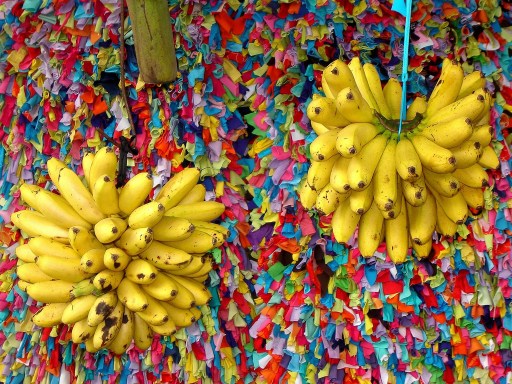
Cool bananas! – genetically speaking

Scientists at the Université d’Evry in France have sequenced the genome of the wild banana, Musa acuminata, the species that gave rise to the commonly eaten Cavendish and other varieties. The banana plant is the largest herbaceous flowering plant, whose ancestor came into existence in the Jurassic period, more than 125 million years ago. The 523 Mbp (523,000,000 base pair) sequence, which contains 36,542 protein-coding genes, was decoded not only to classify the evolutionary history of the banana, but also to identify ways to genetically advance it, improving resistance to pests, expanding the environmental conditions in which it can grow and enhancing the ripening process.

Some very interesting findings that came up along the way include the identification of banana streak virus sequences inserted into the banana’s DNA, presumably following a nasty infection. These viral genomic integrations were found in 10 out of the banana’s 11 chromosomes, but were fragmented and likely incapable of producing live infectious virus. This is ancient evidence that the banana was once under a strong infectious threat, but survived in all its deliciousness until the present day.

Read the original research article here.

D'Hont A, Denoeud F, Aury JM, Baurens FC, Carreel F, Garsmeur O, Noel B, Bocs S, Droc G, Rouard M, Da Silva C, Jabbari K, Cardi C, Poulain J, Souquet M, Labadie K, Jourda C, Lengellé J, Rodier-Goud M, Alberti A, Bernard M, Correa M, Ayyampalayam S, Mckain MR, Leebens-Mack J, Burgess D, Freeling M, Mbéguié-A-Mbéguié D, Chabannes M, Wicker T, Panaud O, Barbosa J, Hribova E, Heslop-Harrison P, Habas R, Rivallan R, Francois P, Poiron C, Kilian A, Burthia D, Jenny C, Bakry F, Brown S, Guignon V, Kema G, Dita M, Waalwijk C, Joseph S, Dievart A, Jaillon O, Leclercq J, Argout X, Lyons E, Almeida A, Jeridi M, Dolezel J, Roux N, Risterucci AM, Weissenbach J, Ruiz M, Glaszmann JC, Quétier F, Yahiaoui N, & Wincker P (2012). The banana (Musa acuminata) genome and the evolution of monocotyledonous plants. Nature, 488 (7410), 213-7 PMID: 22801500

Posted in Science | Tagged , , , | Leave a comment