
Head on over to Scientific American to read our second guest blog post!
Head on over to Scientific American to read our second guest blog post!
Regenerating the human body by growing whole new organs or patching up damaged ones from just a few cells scraped from your own tissues is a fascinating area of science known as bioengineering. Every living cell in such an organ is sustained by the blood, which supplies food and gases and flows through a conduit network of hollow vessels. Successful organ bioengineering relies on establishing such a system of blood flow capable of reaching and supporting the energy demands of every living cell.
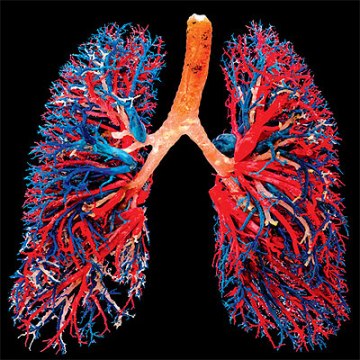 Sprawling throughout our bodies, blood vessels have walls several cell layers thick, incorporating endothelial cells, smooth muscle cells and many others, all woven together and poised in a harmonious balance with their neighbour. Artificially creating something with such natural complexity is a tricky business. The developing human embryo is naturally pre-programmed to form a huge variety of cells from a single founder population, the pluripotent stem cells. These come equipped with a weighty tome of instructions that direct the formation of cellular offspring that populate the various parts of the body. Yet harnessing the capabilities of pluripotent stem cells for organ bioengineering churns up some serious ethical and moral issues, since the only real human source is the developing foetus. The established human body also contains a source of stem cells, known as adult stem cells, which are usually mobilised when organs require maintenance or repair. The problem with using these cells for organ bioengineering is that they are confined to producing cells from a designated category, so aren’t quite as pliable, and are also incredibly rare, so it’s almost impossible to safely harvest a good chunk of starting material. You can get around this by bulking up cell numbers in a dish, but this can be time-consuming (most material harvested from humans grows slowly) and expensive. More than that, manipulating cells in this way often changes their very nature, and once they have been convinced to start growing, what if they don’t stop?
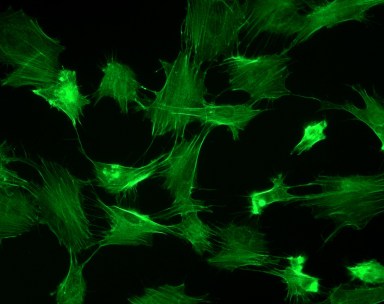
So, clearly, obtaining enough primitive, malleable source material to effectively vascularise a bioengineered organ is an issue. An ideal solution would be to take a common adult cell that has already reached its full potential, is easily harvested and grows like a weed outside the body, and turn it back in time to resemble something like its primordial ancestor, the pluripotent stem cell. Advancing this concept, researcher’s from the UK and China have now developed a totally new type of bioengineering starter cell, the partially-induced pluripotent stem cell, which can create lots of different sorts of cells, but happily lacks the potential for uncontrolled growth and tumour formation. Starting off with fibroblasts (see image, below), widespread cells that provide structure and support in every organ, the team supplied four lots of DNA-targeted instructions designed to reset the cells to a more primitive state. This prompted cells to enter a genetically liquid phase where multiple cell outcomes were possible, including bone, cartilage, fat, nerves or blood vessels. Reset cells underwent rapid changes in how they moved, grew, divided and survived, yet they were also very well-behaved and showed no signs of losing growth control. Several reset cells began to spontaneously form hollow, tube-like structures and expressed genes classically associated with endothelial cells, one of the main cell components of a blood vessel.
Could these reset cells, then, which had already shown a natural inclination to form cells of a vascular origin, be coaxed to focus their development more specifically down this pathway? To test this possibility, reset fibroblasts were fed a tasty molecular soup designed to encourage conversion into endothelial cells. Cells emerging under these conditions built up into multi-layered blood vessel structures, which were robust, stable and able to perform normal functions, such as taking up low-density lipoprotein (LDL), an important part of circulatory health. When cells were seeded onto an artificial bioengineering scaffold, they were able to form nice, native vessels composed of an extensive repertoire of vascular cell types. Perhaps most impressively, these cells also performed admirably when tested for their ability to restore damaged blood vessels in a living animal: when injected into an injured mouse leg, cells were able to attach and integrate into the muscle to improve blood flow, re-establish circulatory system connections and restore oxygen supply to the muscle.
Thus, manipulating a common cell to acquire specialised vascular functions is entirely possible and reprogramming cells in this way is a great step forward in terms of bioengineering safety and feasibility. While researcher’s have not yet tried this with human material, the short time it took to reprogram cells (~2 weeks) suggests that this could be a viable approach to personalised regenerative therapy, which could ultimately render organ donation totally redundant.
Margariti A, Winkler B, Karamariti E, Zampetaki A, Tsai TN, Baban D, Ragoussis J, Huang Y, Han JD, Zeng L, Hu Y, & Xu Q (2012). Direct reprogramming of fibroblasts into endothelial cells capable of angiogenesis and reendothelialization in tissue-engineered vessels. Proceedings of the National Academy of Sciences of the United States of America, 109 (34), 13793-8 PMID: 22869753

The illicit trade in elephant ivory has been a ridiculous problem since the 1980’s, when Asian and African elephants were decimated to such a level that they made it onto Appendix One (“most endangered species”) of CITES. While all trade in their ivory was banned in 1989, poaching is still a huge issue, especially in the dense forests of Africa that camouflage a multitude of illegal activities. Large seizures of black market ivory have been made over the years, but without knowing precisely where in the world these materials are originating from, tracking – and stopping – poachers is a tricky business.
Scientists have made this challenge a little bit easier by developing a test that combines genetics with statistics to match ivory DNA sequences to within 500-1000km of the originating elephant’s habitat. Working up the method on tissue and poop samples from forest and savannah elephants at 28 locations throughout Africa, a team led by Dr. Samuel Wasser correlated sixteen regions of DNA, known to show heady levels of variation between individuals and to act as a unique genetic fingerprint, with location. On a blinded test, their strategy was able to correctly identify the geographic area of origin of forest elephants 83% of the time, and of savannah elephants 35% of the time. Even in the savannah elephants, the 65% of “incorrectly assigned” locations were typically still pretty near the actual location. This approach was then used as part of a criminal investigation into a 6.5 tonne illegal shipment of ivory seized in Singapore, shipped from Malawi, and estimated to be poached from 3000-6500 elephants. While it was suspected that the tusks had been widely culled from across Africa, researcher’s showed that almost all of it came from savannah elephants in Zambia.
This innovative method should make it possible to trace the origins of elephant ivory all over the world, enabling the focussed deployment of anti-poaching efforts. It could also conceivably be expanded to include other endangered species in the illegal wildlife trade.
Wasser SK, Shedlock AM, Comstock K, Ostrander EA, Mutayoba B, & Stephens M (2004). Assigning African elephant DNA to geographic region of origin: applications to the ivory trade. Proceedings of the National Academy of Sciences of the United States of America, 101 (41), 14847-52 PMID: 15459317
Wasser SK, Mailand C, Booth R, Mutayoba B, Kisamo E, Clark B, & Stephens M (2007). Using DNA to track the origin of the largest ivory seizure since the 1989 trade ban. Proceedings of the National Academy of Sciences of the United States of America, 104 (10), 4228-33 PMID: 17360505
 I love cheese. Oh, how I do. Hard cheese, soft cheese, hole-y cheese, crumbly cheese, squidgy cheese – all of them will find a warm and welcoming home in my mouth. While deliciousness alone seals the place of cheese at my table, historically, converting milk into a processed dairy product like cheese had a lot of benefits. Cheese kept a lot longer without going off (a big deal when you didn’t have any way to keep food cool and fresh), was easy to transport and trade, and was digested much more easily by the human gut. It also meant a continuous supply of food throughout the year without needing to kill animals for meat.
Making cheese back in prehistoric times was not a trivial process: first, milk had to be coagulated to produce a mixture of semi-solid curds and liquid whey. Then, the liquid had to be strained off, and the remaining curds pressed to solidify into cheese. There is now delicious historical evidence that in early Neolithic times, small pottery vessels poked through with lots of randomly-placed holes were used as designated cheese strainers. Researcher’s analysed and compared shards of pottery from either these sieve-like vessels or from three ‘general’ types of cooking pots, bowls and collared flasks, all of which were unearthed in archaeological digs along the Vistula river in Kuyavia, Poland, and dated to around 5000 BC. Fats extracted from the surfaces of these different pot shards showed a marked concentration of fresh dairy animal fats and fatty acids from milk bacterial populations in the vessels with holes, but not in the general pots, bowls and flasks. These specialised kitchen tools currently represent the earliest evidence for the innovative introduction of cheese making in humans.
Salque M, Bogucki PI, Pyzel J, Sobkowiak-Tabaka I, Grygiel R, Szmyt M, & Evershed RP (2013). Earliest evidence for cheese making in the sixth millennium BC in northern Europe. Nature, 493 (7433), 522-5 PMID: 23235824
Repairing or replacing damaged cells keeps our organs in tip top working condition. For a long time, we thought that only the incredibly rare stem cells in adult organs were able to create brand new cells to replace injured ones and fix damaged areas. Yet some tissues definitely don’t conform to this autocratic model: following liver damage, for example, mature hepatocyte cells that normally exist in a semi-retired state re-engage their cell cycle and undergo a huge amount of cellular proliferation to patch up affected sections.
 For other organs, such as the heart, it’s still unknown if stem cells or mature cardiomyocyte cells are responsible for performing such repairs. One team of researcher’s recently got to grips with this question by supplying cells in the heart with thymidine, one of the building blocks of DNA, tagged with a stable isotope of nitrogen, 15N. Since DNA is duplicated during cell division, heart cells that are actively dividing incorporate the 15N-thymidine and can be tracked. After suffering a heart-damaging myocardial infarction, mature cardiomyocyte cells immediately next to the affected area incorporated the trackable thymidine. Around 15% of these mature cells came out of semi-retirement and actively re-entered the cell cycle, dividing to generate fresh new cells. The other 85% simply got bigger to take on more work, compensating for the lost cells and maintaining cardiac output. No stem cells were observed to incorporate 15N-thymidine in a substantial way.
So, it’s not just jazzy, energetic stem cells that can support the biological business of tissue repair. The heart, like the liver, contains established, mature cells capable of producing lovely new cells. This knowledge could help to identify new ways of speeding up the healing process.
Senyo SE, Steinhauser ML, Pizzimenti CL, Yang VK, Cai L, Wang M, Wu TD, Guerquin-Kern JL, Lechene CP, & Lee RT (2013). Mammalian heart renewal by pre-existing cardiomyocytes. Nature, 493 (7432), 433-6 PMID: 23222518




 mmmbitesizescience