Mercury in vaccines – is it really a concern?

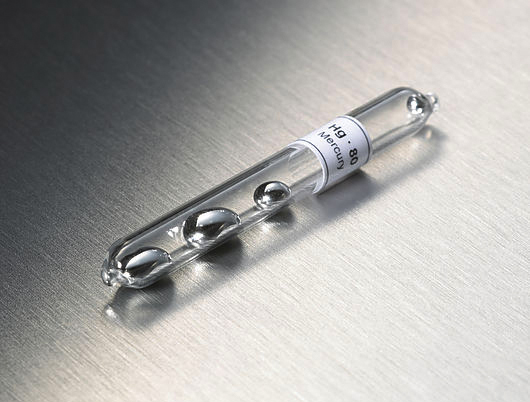
We are all exposed to mercury in our lives, through consumption in the diet, in some vaccines, at the dentist’s (those silver fillings) and through environmental exposure. High biological levels of mercury lead to serious health problems, including loss of memory, depression and dementia. Indeed, Environmental Protection Agency guidelines to limit the amount of mercury in your diet are probably sound, especially during pregnancy when exposure to even small amounts of mercury can harm the developing foetus.

When it comes to vaccines, since 2001, any new FDA-approved vaccine has to be mercury-free. However, the yearly-formulated seasonal flu vaccine is an exception to this rule, but only on a ‘bulk use’ basis: single dose vials that are intended to be opened and used once do not have a mercury component, but multi-dose vials are supplied with a mercury-containing preservative, thimerosal. In multi-dose vials, repeated doses of vaccine are withdrawn during a mass immunisation session, putting the contents at a higher risk of contamination, even though vials are discarded at the end of the session or after 6 hours (whichever comes first). Thimerosal prevents the growth of dangerous microorganisms, such as bacteria and fungi. Other vaccines approved before 2001, such as the pertussis (whooping cough), tetanus and meningococcal vaccines, also contain low levels of thimerosal (~0.01%).

Many different governmental and independent bodies, including the World Health Organisation (WHO), the Center for Disease Control and Prevention (CDC), the National Institutes of Health (NIH) and the Food and Drug Administration (FDA), have reviewed current evidence to determine if inclusion of thimerosal in vaccines is harmful to human health: all have concluded that there is no scientifically-sound evidence that links exposure to thimerosal through vaccines with disease (including autism).

Visit http://www.fda.gov/food/foodsafety/product-specificinformation/seafood/foodbornepathogenscontaminants/methylmercury/ucm115644.htm to find out which fish contain the highest levels of mercury, helping to manage a healthy level of consumption in your diet.

Posted in Science, Vaccines | Tagged , , , | Leave a comment

London 2012: a city of infection?

Image

With the London 2012 Olympics set to begin in five days time, if you’re a Londoner, now might be a good time to check your vaccination records. The Olympic games represents one of the largest gatherings of humanity from all corners of the globe. Such large events, be they sporting, artistic, religious, political or musical in nature, can lead to breakouts of infectious disease, although these are relatively rare: a report that analysed records spanning 1964 to 1993 turned up only 38 outbreaks associated with sports events. More recently, the Special Olympics in Minneapolis in 1994, the Vancouver Winter Olympics in 2010 and a Superbowl event in Indiana in February this year have all been associated with infectious disease outbreaks. With several million visitors expected in London over the 16 days that the Olympic games will be held, public health officials are working hard to make sure that people are aware of the risks.

And it’s not just for human competitors: spare a thought for the horses in the equestrian events. Even though horses must pass a strict health test before travelling, outbreaks can still occur: equine influenza was detected at a horse trials event in Queensland, Australia in 2007, while equine herpesvirus was identified following a national equine championship event in Utah in 2011.

The American Centers for Disease Control and Prevention (CDC), the European Centre for Disease Prevention and Control (ECDC) and the World Health Organisation (WHO) have all issued warnings that spectators at the London 2012 Olympics should make sure that their vaccines are up-to-date, especially for measles, which is currently undergoing a resurgence in several countries, including the United Kingdom.

Before you travel, make sure your routine vaccinations are up-to-date. The main travel risks are food- and waterbourne illness, airbourne disease and sexually-transmitted disease. Simple measures, such as hand sanitisation, drinking bottled water and the use of prophylactics during sexual intercourse, can help to protect you against these risks.

Posted in Science | Tagged , , , , , , | 1 Comment

Gardasil vs. Cervarix: clash of the HPV vaccines

Over 90% of cases of cervical cancer are caused by exposure to human papillomavirus (HPV), a sexually-transmitted infection. While regular cervical screening tests have been effective at reducing cervical cancer incidence, many countries have solidified their prevention campaigns by introducing HPV vaccination programs. There are currently two licensed HPV vaccines on the market: Cervarix, made by Glaxosmithkline, and Gardasil, made by Merck & Co. Currently, Australia, Denmark and France use Gardasil, while the UK and the Netherlands use Cervarix. However, from 1st September 2012, the UK government will overhaul the national HPV vaccination program, replacing Cervarix with Gardasil.

So why the change? Two human papillomaviruses carry the highest risk of cervical, anal, vaginal and penile cancers: HPV 16 and 18. Both vaccines are protective against these two viruses. Yet Gardasil protects against an additional two viruses, HPV 6 and 11, which are directly linked to the development of genital warts. So, broader protection from a greater number of sexually-transmitted viruses is achieved with Gardasil compared to Cervarix.

This leads to the obvious question: why didn’t the UK use Gardasil from the very beginning? It probably boils down to a short-term cost analysis made at a time when solid clinical evidence was lacking. The full course of 3 injections of Cervarix costs approximately £241.50, while Gardasil comes in at a slightly more expensive £265.50. But when you consider longer-term cost-benefit ramifications of using the bivalent Cervarix (which protects against two viruses) over the quadrivalent Gardasil (which protects against four viruses), Gardasil has the greater potential to reduce the healthcare burden of HPV infections (i.e. treatment costs) since it protects against more disease-causing HPV types.

Cost is also likely a major reason why the HPV vaccination program hasn’t been rolled out to include young men, despite the fact that HPV infection is a major cause of penile cancer. An additional consideration is that if uptake of the HPV vaccine in young women reaches high enough levels (>90%), and the vaccine-induced protection lasts for a long time, then vaccinating young men becomes partially redundant: herd immunity, at least in heterosexual couples, would have been achieved. This means that there would be no reservoir of female infection to be transmitted to men: men would be protected simply by women being vaccinated.

HPV vaccination, regular cervical screening tests (every 2-5 years), the use of prophylactic condoms during sexual intercourse and limiting your number of sexual partners can all help to minimise the risk of HPV infection. For more information, go to http://www.cdc.gov/std/hpv/stdfact-hpv.htm/

Posted in Science, Vaccines | Tagged , , , , | Leave a comment

Cases of whooping cough at a 20 year high in the UK

Whooping cough, or pertussis, is a highly contagious bacterial disease of the respiratory tract caused by Bordetella pertussis or parapertussis. The combined diphtheria-tetanus-pertussis (DTap) vaccine was introduced as part of the government-funded childhood vaccination program in 1940, and in most first world countries, over 90% vaccine uptake is achieved. However, the childhood vaccine does not provide lifelong protection, with immunity declining over time.

There has been a significant increase in pertussis incidence in the UK in 2012, with the Health Protection Agency reporting a “greater than expected” number of cases of whooping cough, based on estimates from the same period in 2011. 1,781 cases have been reported to the end of May 2012, compared with 1,118 cases for the whole of 2011. Young babies (<3 months) and young adults (>15 years) are currently the most severely affected: this age-grouped pattern of infection is likely related to a lack of protection in older children and adults who have not received a booster vaccine, who can then act as a reservoir of infection in the community.

The pertussis vaccine is administered as five shots, the first beginning at 2 months of age. If you didn’t receive the full course of the pertussis vaccine as a child, or if it has been more than 10 years since you were vaccinated against pertussis, you should consider receiving an adult booster dose from your health care provider.

Posted in Science, Vaccines | Tagged , , , | Leave a comment

Sunlight Boosts Immune Responses

Image

In the Summer months, most people experience a jaunty improvement in their mood and a more positive outlook on life. But are there other less obvious benefits than achieving an even tan and beautiful sun-streaked hair? According to researchers at the University of California, the answer may be a resounding yes.

The UVB fraction of visible light that comes from the sun reacts with melanin, a pigment in the skin, to produce vitamin D. In the Summer months, since the period of light is lengthened and the light is more intense, vitamin D levels are boosted. There is already a well documented link between higher levels of Vitamin D and improved mood, and the benefit of vitamin D on enhancing immune function is also well described. Activated vitamin D, a steroid hormone, stimulates anti-microbial immunity, especially innate immune defenses. Studies have now shown a link between higher vitamin D levels and improved immunological control of two serious pathogens, Mycobacterium tuberculosis (M.tb), the causative agent of tuberculosis, and human immunodeficiency virus (HIV) in human patients. Vitamin D supplementation is now a serious contender to be added to the arsenal of treatments available for these diseases.

Vitamin D is not only generated from exposure to sunlight, it can also be obtained through dietary means: butter, eggs and cod liver oil are all natural sources. Consider keeping these things in your diet over Winter to naturally boost your mood.

Campbell GR, & Spector SA (2012). Vitamin D inhibits human immunodeficiency virus type 1 and Mycobacterium tuberculosis infection in macrophages through the induction of autophagy. PLoS pathogens, 8 (5) PMID: 22589721

Posted in Science | Tagged , , , , | Leave a comment