Antibiotics hit your gut microbes hard

batman doesn't like antibiotics being overused

These days, most doctor’s are acutely aware of the problems of overprescribing antibiotics. Historically given as more of a placatory gesture – ‘I have to prescribe something, else this patient will think I’m an incompetent buffoon’ – their overuse almost single-handedly drove the rapid development of antibiotic-resistant bacteria, like MRSA. Yet we’re becoming more and more aware that antibiotics don’t only drive huge reactive changes in the bugs that we’re trying to kill, but also in our own bodies. Because the problem with antibiotics is their broad approach to killing – they don’t only target the ‘bad’ bugs, but also the trillions of happy, healthy bugs that live in our gut and work with us to digest food that we couldn’t process alone. The collective term for this huge community of microorganisms inhabiting our digestive tract is the, ‘microbiota‘, and it’s vital for maintaining a healthy gut.

intestinal-bacteria-670

We don’t really know much about the reactions of gut bacteria to antibiotic therapy, but since around 60% of faecal matter is made up of these microbes, your poop gives a good indication of what’s going on in the digestive tract. Researcher’s at the University of València in Spain analysed microbial changes in the faeces of one individual undergoing a 14 day course of beta-lactam therapy, a common class of antibiotics that control bacteria by interfering with their ability to build cell walls. The first bugs to be affected by the antibiotics were the gram-negative ones, whose numbers dropped off rapidly. The overall diversity of the gut microbiota plummeted, as only bugs that were naturally resistant to beta-lactams were able to survive: they began thriving after the death of antibiotic-susceptible bugs freed up large pools of nutrients. Then, gram-positive bugs began to overpopulate the gut. This bacterial imbalance hampered the metabolism of vitamins D and B12, cholesterol, hormones and iron, leading to potential dietary deficiencies. Four weeks after antibiotic treatment had finished, gut digestive function improved as surviving gut microbes began to re-establish normal service, but certain ‘good’ bugs that had been present before antibiotic therapy began did not reappear and likely had been permanently wiped out.

This research builds up an intriguing picture of how the gut microbiota changes during antibiotic therapy. It also suggests that antibiotics should continue to be reserved for only the most compelling bacterial diseases, since such disturbances in the gut microbiota are likely to drive the acquisition of antibiotic-resistance, the overgrowth of dangerous bacteria and the unhealthy loss of ancient ‘good’ gut bacteria.

Pérez-Cobas AE, Gosalbes MJ, Friedrichs A, Knecht H, Artacho A, Eismann K, Otto W, Rojo D, Bargiela R, von Bergen M, Neulinger SC, Däumer C, Heinsen FA, Latorre A, Barbas C, Seifert J, Dos Santos VM, Ott SJ, Ferrer M, & Moya A (2012). Gut microbiota disturbance during antibiotic therapy: a multi-omic approach. Gut PMID: 23236009

Posted in Bacteria, Ecology, Microorganisms, Science | Tagged , , , , , , , , , , | 1 Comment

24 hours in the life of HIV

HIVHuman immunodeficiency virus, or HIV, only emerged in humans relatively recently, yet already represents a big public health threat. When HIV enters the human body, often through sexual contact or the sharing of needles between drug users, it shows a remarkably focussed preference for infecting a certain population of immune cells, known as CD4+ T cells. Since these cells usually play a major role in vanquishing a viral foe, this is the perfect spot for HIV to hide out, since it essentially disappears behind an immune firewall.

Once HIV infects a CD4+ T cell, it often stays silent for long periods of time. Eventually, though, it will begin to multiply in a process known as replication. We know that it takes about 24 hours for HIV to complete its replication cycle, producing lots of progeny viruses that spread through the entire body. Yet the exact stages and timings of this replication process are not very clear. Researcher’s in Switzerland have now determined that nine intermediate stages occur through a single 24 hour replication cycle. Timewise, 3 hours after first entering the CD4+ T cell, the virus begins processing its own genetic material to make it compatible with that of the host cell. At 4 hours, the virus orchestrates a huge shutdown of all normal host cell functions. Any host genes with the ability to attack and subdue HIV are particularly targeted. At 8 hours, the viral genetic material is forced into the DNA of the host cell. Viral data starts to be decoded, forming a blueprint that will guide construction of new HIV particles. At this point, the virus begins to switch certain cellular functions back on, to help viral replication. By 15 hours, all the component parts necessary to build new virus particles have been produced and at 18 hours, fully completed viruses are coming off the production line. They leave the nursery cell where they were created, and set about finding a new CD4+ T cell to start up their own replication cycles.

This research gives us an excellent insight into the life cycle of a single HIV particle. Knowing when each stage emerges during replication could help us apply targeted interventions, aimed at preventing the transition between certain stages and thus blocking viral reproduction. This may ultimately help to guide the development of better treatments.

Mohammadi P, Desfarges S, Bartha I, Joos B, Zangger N, Muñoz M, Günthard HF, Beerenwinkel N, Telenti A & Ciuffi A (2013). 24 Hours in the Life of HIV-1 in a T Cell Line PLOS Pathogens, 9 (1) : 10.1371/journal.ppat.1003161

Posted in Disease, Medicine, Microorganisms, Science, Viruses | Tagged , , , , , , , , | Leave a comment

The journey to parasite egg paradise

liver meal

The parasite, Schistosoma mansoni, is a remarkably cunning and efficient worm. It spends the first part of its life infecting freshwater snails, where it vigorously multiplies to bulk up numbers. This parasite army then marches out of the snail and into the river, encounters an unsuspecting human, latches on to their skin and burrows its way inside, more often than not through a hair follicle. Schistosomes infect more than 200 million people a year, in many parts of the world, and since most worms live for more than 10 years, infection with this pathogen is a long-term health problem.

In the human body, the parasite lives most of its life in the bloodstream, but when it comes time to produce tiny parasite offspring, this is a bad neighbourhood to bring up the kids. A much more nurturing location is the human gut, a stable, moist and nutrient-rich environment. Eggs are first laid in the veins carrying blood from the gut, and from there, they hop into the intestines, finally being pooped out from the host to continue their life cycle back in the freshwater snail. Exactly how the eggs migrate from the vein to the gut has been a vaguely grey area, but now a team of researcher’s at the University of York have shown that a big part of this journey involves the eggs accumulating in Peyer’s Patches. These are small pockets of immune tissue in the gut wall that maintain immune surveillance, and are particularly well supplied with extra energy and nutrients. Once the eggs are settled in these cosy patches, they secrete factors that force the area to undergo an extensive biological remodelling, making it easier for the eggs to slip out of the host once they’ve reached full maturity.

Thus, the dastardly schistosome is an excellent example of a human pathogen that can commandeer our natural anatomical and biological features, manipulating them to its own advantage to improve the chances of reproductive success.

Turner JD, Narang P, Coles MC, & Mountford AP (2012). Blood Flukes Exploit Peyer's Patch Lymphoid Tissue to Facilitate Transmission from the Mammalian Host. PLoS pathogens, 8 (12) PMID: 23308064

Posted in Disease, Microorganisms, Parasites, Science | Tagged , , , , , , , , , , , , , , | Leave a comment

What makes the smallpox vaccine so great?

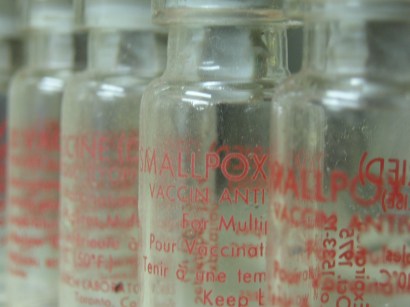
Perhaps one of the most incredibly effective vaccines ever used, against smallpox, has completely eradicated a terribly nasty human disease. Yet the way in which vaccinia virus, the live poxvirus contained in the smallpox vaccine, actually orchestrates a protective immune response is still mostly unknown. The live virus component is a major reason why the smallpox vaccine is so good – instead of having some crusty bit of dried up dead protein in there, there is a real virus that looks a bit like smallpox and properly challenges the immune system.

smallpox vaccine vials

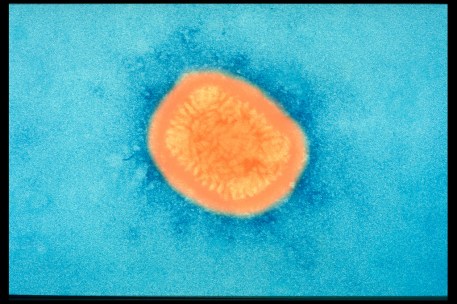
Once the smallpox vaccine is administered, vaccinia begins replicating in the human body, causing a mild infection, and soon begins to exist in two different forms: one lives outside the cells of the body, milling about and spreading to infect new cells, while the other hides out inside the cells of the body and spawns lots of new viruses. The one that lives on the outside of cells is typically exposed to and controlled by the immune system, and is made up of five major surface protein components (A33, A34, A36, A56 and B5), as well as a lipid membrane that surrounds the entire virus particle, all of which can be targeted by immune cells.

smallpox virus

Researcher’s have been trying to understand how one part of the immune system, the antibodies, drive protection against vaccinia virus – and thus against smallpox. Typically, if enough antibodies bind to enough important virus proteins, this blocks virus accessibility and shuts down infection. Yet this does not seem to be the case with vaccinia. One team in California recruited nine people who had previously received the smallpox vaccine and looked at antibody responses in their blood. In all nine individuals, antibodies recognising vaccinia struggled to inactivate the virus on their own, only working properly to suppress viral infection in the presence of another immune system component, complement. Complement is a series of proteins in the blood, which help antibodies by attracting other immune cells to neutralise foreign material. Four individuals controlled the virus almost exclusively through neutralising antibodies targeted against the virus protein B5, while other donors had a minimal contribution (15-28%) from B5 antibodies; their protection, instead, was supplemented by antibodies against a second virus protein, A33. The only effective antibodies against either B5 or A33 were the ones that bound vaccinia virus very tightly, in a destructive huggy embrace.

This suggests that, contrary to current theories in vaccine development, antibodies don’t have to be able to work alone to bring about viral destruction in order to effectively control disease. While antibodies are important in establishing immunity against smallpox, multiple parts of the immune system work together to protect against such pathogens.

Benhnia MR, Maybeno M, Blum D, Aguilar-Sino R, Matho M, Meng X, Head S, Felgner PL, Zajonc DM, Koriazova L, Kato S, Burton DR, Xiang Y, Crowe JE Jr, Peters B, & Crotty S (2013). Unusual features of vaccinia virus extracellular virion form neutralization resistance revealed in human antibody responses to the smallpox vaccine. Journal of virology, 87 (3), 1569-85 PMID: 23152530

Posted in Disease, Microorganisms, Science, Vaccines | Tagged , , , , , , , , , , | Leave a comment

Sexy times don’t help induce labour in late pregnancies

Even though I’ve never been pregnant, I’ve lived in the world long enough to have absorbed random nuggets of wild information, like there are lots of ways to try and bring on labour in women at the end of their pregnancies – eating tinned pineapple or really spicy curries being among the more popular. Most of these theories are passed on as old wives tales, and haven’t really been rigorously tested by science. Then again, when you’re 37 weeks into it and have the comfort and mobility of a beached whale, you’re probably willing to try anything to expedite the process.

One theory, that having sex can safely bring on labour in late stages of pregancy, actually seems to make sense. Lovely sexy times are known to cause the release of hormones, such as oxytocin, that are also necessary for starting up labour and beginning uterine contractions that push the tiny human out into the world. Added to that, the male ejaculate itself is known to weaken the chorioamniotic membranes that surround and protect the developing foetus in the uterus, potentially helping the waters to break. Past studies designed to test the link between frequency of sexual activity and onset of labour lack consistent results, so it’s still unknown whether there is a real effect or not.

2138153798_e690068b33_o

Now, researcher’s in Kuala Lumpur have addressed this in a large study of 1137 Malaysian women between 36 – 38 weeks of pregnancy, who were recruited and assigned to one of two counselling groups: the first group were counselled that having sex was a safe and natural way to speed up giving birth and avoid having to be induced, while the second (control) group received no such advice. Although it was obvious that receiving medical advice affected behaviour (more women in the advised group had late pregnancy sex than the non-advised controls), the team found that there was no benefit of increasing the frequency of sexual activity in kickstarting the process of giving birth. Perhaps it’s time to revisit the tinned pineapple, after all?

Omar N, Tan P, Sabir N, Yusop E, & Omar S (2012). Coitus to expedite the onset of labour: a randomised trial. BJOG : an international journal of obstetrics and gynaecology PMID: 23145957

Posted in Reproduction, Science | Tagged , , , , , , , , , | Leave a comment